Pages

Wednesday, September 28, 2011

Sewing for Little Girls

Some time ago I bought the book Carefree Clothes for Girls: 20 Patterns for Outdoor Frocks, Playdate Dresses, and More 
At the time I loved the look of some of the clothes but other priorities seemed to get in the way of actually making anything. So with Autumn's Deb Ball coming up and having finally finished her dress I thought I would make the three younger girls a dress to wear for this special night.

I was going to make a summer print dress using the pattern from the book and complete with some very sweet little cotton pantaloons but not knowing the weather and the finding of some gorgeous tights (thanks Bernadette) I thought Panne Velvet would be perfect for the dresses.
The dresses were ver easy to make and the three colours  suit the three girls so well. The fall of the simple dress is very elegant and  I really like working with panne velvet as it does not need overlocking for fraying edges.
All in all I made these dresses in an afternoon (well when you space the time I actually spent sewing over a couple of days).

I really am looking forward to doing much more simple sewing this spring and summer using this book and some others I bought at the same time.

 Blessings to you and your homes,

Tuesday, September 27, 2011

Renovation Fantasy

,

I love this place I run past each morning. It's old and lopsided and sort of 'spooky', as my little one would say....but it's got the whole 'bungalow thing' happening. 

I love it's roof line and the fact that it's low to the ground. It's got a beautiful big, L-shaped, closed-in verandah around to the left.... that runs down the whole left hand side.... that is screaming to be opened up for our summery climate. 

I like the entrance. I'd turn those steps into some solid random stone steps to anchor the whole house and get the whole 'bungalow thing' happening. I'd rip out the iron bars (I know why they are there though... 'interesting' street), change the skillion roofline a bit and open out the verandah, whack on a new colourbond roof, do the picket fence thing complete with the prettiest gate, stone the path to the steps and do lavender hedging along the path. I'd add some pretty, double-hung 4 x 4's in the bay window too, trim the tree, grow some lawn in the shade and put in a pretty garden seat......

...stop me now! Stop me. 


It's lovely isn't it? Would love to see inside. I bet it's all very original.... archways, sleepouts... maybe even the original kitchen with an old stove recess ....or some groovy 1950's kitchen. The heritage colours on the bay window suggest even maybe a 1980's touch up? Those colours were all the rage in the 80's.... heritage green, mustard yellow and maroon. There could even be a funky 1980's, canary yellow kitchen inside??!!

What would you do? What colours would you use? Would you keep the entrance as it is or take it back to the verandah and start from there?

I want to do a low house next time. No steps. Bungalow-ish. Next time.

Happy Wednesday! 
My boys are off for a play date so I have the whole day to work.... uninterrupted. Delicious.

Photobucket

Monday, September 26, 2011

Hearts for Home - 27th September

 In today’s busy and aggressive society mothers at home are not given much encouragement to be committed to their role in being home.

In my weekly 'Hearts for Home' post I am encouraging myself and others to commit to thinking about what 4-6 things we can do each week to bring our thoughts, prayers and actions to keeping our 'Hearts for Home'.

I am praying that a spirit of gentleness, generosity in thoughts and time along with loveliness and grace would lead us to be all that God wants us to be.

I pray also that each person involved in 'Hearts for Home' would also pray for any others involved as well.

May you be blessed by this initiative. I pray it brings you and your family many blessings.

So each week list 4-6 things you will commit to that will keep your "Hearts for Home'.
Please leave a you name and a link to your blog (if you don't have one just leave your list in the comment box) and perhaps a comment so we can all see and encourage each other.

If you would like, add the 'Hearts for Home' logo to your side bar as a reminder of your goals.
May God Bless you this week.

♥ Please leave a link to your Hearts for Home Edition on the Mister Linky at the end of the post, so we can all come and visit.
I would also appreciate you linking back here too.☺ ♥ ♥

Enjoying our lives on the 13th September by doing ♥ ♥

Hello Dear Friends,

This week is a very unusual one for us as we away from home on a family holiday and staying with some very good friends.

Therefore my heart is not centered around our home as a physical space but the home we have created within in our family circle.

We are just going to enjoy this time away nourishing our hearts and souls in the presence of each other as we have been blessed with this holiday gift of being able to have this time together

However as we are completely out of routine I do need to keep my heart focused on our little ones especially as we enjoy this time, but allowing for the tired little ones who get very excited with all the new and exciting experiences

So I will be adjusting expectations of what we can expect form each other as we are experience this wonderful time together.

Praying you all find peace and joy in your own homes this week,


GULF OIL HAMMERS FISH

Deepwater Horizon oil coming ashore at Chandeleur Islands, LA. Credit: Jeffrey Warren, Grass Roots Mapping project, via Wikimedia Commons.


Even minuscule amounts of BP's crude oil has affected fish in profound ways in the Gulf of Mexico—even when oil in the water was nondetectable. This according to a paper in early view in PNAS (Proceedings of the National Academy of Science).

The problems showed up as genetic responses in liver tissue and as aberrant protein expression in gill tissues—and they lived on in fish even after their environment looked and tested clean.

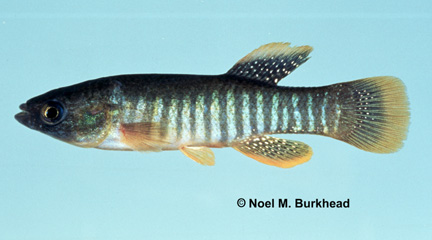
Gulf killifish, Fundulus grandis. Credit: USGS.


Researchers from Louisiana State University, Texas State University, and Clemson University studied the 2010 Deepwater Horizon oil catastrophe on Gulf killifish (Fundulus grandis).

They collected water and tissue samples from six sites—though only one, Louisiana's Barataria Bay was heavily oiled. They collected at three times:

  • Once in early May before oil had reached shore
  • Once in late June when the marshes were fouled
  • Once in late August when oil was no longer visible

(A) Location of field sampling sites. (B) Photograph (by A.W.) of the GT field site on 28 June 2010 showing oil and minnow traps in the marsh. (C ) Proximity of nearest surface oil to each field site was determined by synthetic aperture radar, where rows are field sites and columns are days. Light gray=no data; black=the nearest surface oil at a distance of >4 km; increasing intensity of red=closer proximity of oil. Three field sampling trips are highlighted in blue boxes. Credit: Andrew Whitehead, et al. PNAS. DOI:


The researchers found that exposure to BP's crude oil caused the same kind of changes in gene expression in adult killifish from the marshes as in killifish embryos exposed to contaminated water samples in the lab. These types of changes are known to:

  • cause developmental abnormalities
  • to diminish embryo survival
  • to lower reproductive success

Gill tissues important for maintaining critical body functions were also damaged by altered protein expression correlated to oil exposure. Worse, these effects persisted long after the visible oil disappeared from the marshes. Exposures in the lab to developing embryos induced similar cellular responses. 

"This is of concern, because early life-stages of many organisms are particularly sensitive to the toxic effects of oil, and because marsh contamination occurred during the spawning season of many important species," says lead author Andrew Whitehead
  
Oiled marshes, Barataria Bay, June 2010. Credit: ©Julia Whitty.

 
The research echoes ongoing studies from the Exxon-Valdez catastrophe showing that sub-lethal biological effects of oil continue to impact herring and salmon populations long after the disaster. The new paper indicates Gulf killifish are suffering similar early sub-lethal effects in the Gulf.

And as with the Exxon Valdez, the fish are proving far more sensitive indicators of exposure and contamination than the environmental chemistry. 

"Though the fish may be 'safe to eat' based on low chemical burdens in their tissues, that doesn’t mean that the fish are healthy or that the fish are capable of reproducing normally," says Andrew Whitehead

BP's oil in Barataria Bay, June 2010. Credit: ©Julia Whitty.

  
The paper:

Whitehead, A., B. Dubansky, C. Bodinier, T. Garcia, S. Miles, C. Pilley, V. Raghunathan, J. Roach, N. Walker, R. Walter, C.D. Rice, and F. Galvez. Genomic and physiological footprint of the Deepwater Horizon oil spill on resident marsh fishes. Proceedings of the National Academy of Sciences. DOI:

Feeding Offspring


I don't know about you... but having 2 growing, active boys home on school holidays.... I seem to spend my life in the kitchen feeding them....especially the big one. 

I'm going to try this....spend the time I usually spend making school lunches in the morning making a 'snack box' for the day. Hungry son? Sort yourself out.... head to the 'snack box'.

My 'snack box' might have to be bigger than this though. That's the size of my almost 14 year old's school lunch. He takes an esky to school! He's already up to the 6 weetbix for breakfast.

Any tips? How do you cope with the school holiday feeding frenzies?
Photobucket

HAECKEL'S OCEAN

Actiniae [sea anemones]


Prosobranchia [archaic: snails]


Acsidiae [sea squirts]


Cyrtoidea [archaic: radiolarians]


Chaetopoda [archaic: segmented worms]


Hexacoralla [corals & allies]


Gamochonia [archaic: cephalopods]


Decapoda [crustacean]


Ostraciontes [boxfishes & allies]


Diatomea [diatoms]


Discomedusae [archaic: jellyfish]


Ophiodea [brittle stars]


Cubomedusae [archaic: box jellyfish]


Excerpted from Wikipedia:

Ernst Heinrich Philipp August Haeckel (16 February 1834-9 August 191) was an eminent German biologist, naturalist, philosopher, physician, professor, and artist who discovered, described and named thousands of new species, mapped a genealogical tree relating all life forms, and coined many terms in biology, including anthropogeny, ecology, phylum, phylogeny, stem cell, and the kingdom Protista. Haeckel promoted and popularized Charles Darwin's work in Germany and developed the controversial recapitulation theory ("ontogeny recapitulates phylogeny") claiming that an individual organism's biological development, or ontogeny, parallels and summarizes its species' evolutionary development, or phylogeny.
The published artwork of Haeckel includes over 100 detailed, multi-colour illustrations of animals and sea creatures (see: Kunstformen der Natur, "Art Forms of Nature"). As a philosopher, Ernst Haeckel wrote Die Welträtsel (1895–1899, in English, The Riddle of the Universe, 1901), the genesis for the term "world riddle" (Welträtsel); and Freedom in Science and Teaching to support teaching evolution.
In the United States, Mount Haeckel, a 13,418 ft/4,090 m summit in the Eastern Sierra Nevada, overlooking the Evolution Basin, is named in his honor, as is another Mount Haeckel, a 2,941 m/9,649 ft summit in New Zealand; and the asteroid 12323 Haeckel.

All plates from Ernst Haeckel's Kunstformen der Natur, courtesy of Wikimedia Commons.

Sunday, September 25, 2011

Mother and the Home Fires

Some time ago while visiting Kim at Quaker Cottage she posted a beautiful passage from a book she was reading "The House on the Rock" from the book Lift Up Your Hearts to Mary, Peace, Prayer, Love by  Caryll Houselander.

As I read the passage (contained below) I was once again reminded of the aspirations I have for our home: To provide a sanctuary for all who enter within our Home and visit our Hearth.


I am, like so many other 'Keepers of the Hearth' are in need of  encouragment in our vocations in this world that does not deem our roles in society of importance and thus when I read such beautiful sentiments I am inspired to do that little bit better to provide a sanctuary for those within my family circle.


I hope this is inspiring for you as well.

To a young child home stands for God.  In it he learns to see and touch the gifts of God.  If his mother is wise she will make his home beautiful.  She will copy the world's creator and make a tiny new Eden.  She will bring in flowers and give the child animals and feed the birds.  The food on the table will be clean and simple and good.  It will not only taste nice, it will look nice . . . 

It is in his home that the child should assimilate the Sermon on the Mount, not as if it were being drilled in his brain by words, but as if he were breathing it in his whole being like the air . . .

The ordering of time, which seems so simple, really requires great skill and energy from the mother.  It has tremendous importance, above all if it is related (as it obviously should be) to the rhythm of day and night and is interwoven with prayer.

The child should wake to the singing of the birds (and they sing in the cities as well as in the woods).  Give his heart to God, when light is young, play for long hours when the world is awake and lively.  He should form habits of regular hunger and thirst, so that food and hunger come together, and his grace is a real thanking.  With twilight there should come stillness in the house and he should be lit to bed by the stars.

From such ordering of time he will learn unconsciously, though it may be years before he thinks this out, that he is not part of that chaos that man has made of this world, with its fearful abuse of time, but part of an ordered plan of love.

Blessings to you and your homes,
Related Posts Plugin for WordPress, Blogger...